
Most managers in Australia were never trained to lead. They were promoted because they were good at their job. Then one day, they had a team, a set of expectations, and no real framework for how to meet them.
This is one of the most common and costly gaps in Australian business. Poor leadership drives disengagement, and disengaged teams drive turnover. According to Gallup, managers account for 70% of the variance in employee engagement scores. When leadership is weak, everything else suffers.
Leadership assessment tools change this. They help businesses identify where their managers are strong, where the gaps are, and what to do about them before those gaps affect team performance, culture, or retention.
In this guide, we will cover what leadership assessment tools are, the different types available, and how AI is making leadership development faster, more continuous, and more practical for Australian businesses.
What Are Leadership Assessment Tools?
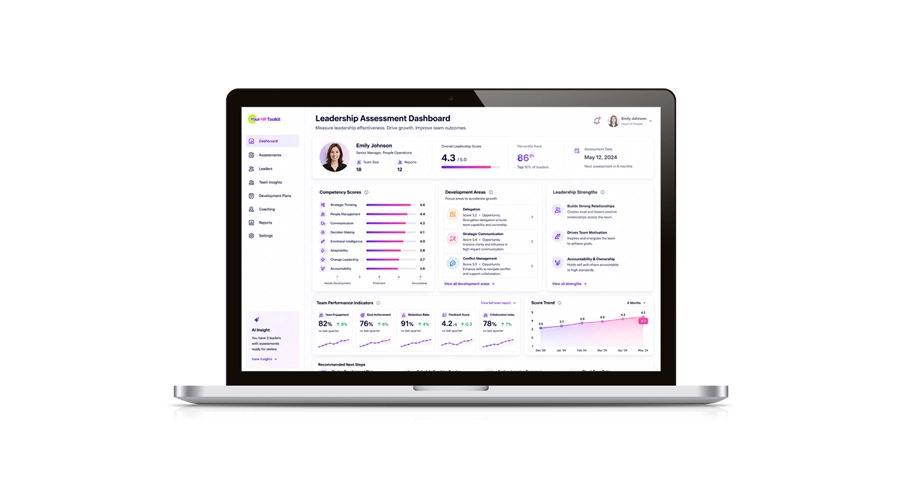
Leadership assessment tools are structured methods for evaluating the skills, behaviours, and effectiveness of people who manage others. They can take many forms, from self-assessments and 360 surveys to competency frameworks and AI-powered coaching platforms.
The best leadership assessment tools do more than produce a score. They give managers specific, actionable feedback about how they lead, how their team experiences their leadership, and where they need to grow. They also give businesses a consistent way to identify leadership talent, succession plan, and make development investments in the right people.
The Australian HR Institute (AHRI) recognises leadership capability as one of the most critical factors in workforce performance, and provides professional standards that include leadership competency benchmarks for HR and people management practitioners.
Why Leadership Assessments Matter for Australian Businesses
Leadership effectiveness is not just a development issue. It is a business performance issue. In the Australian context, where hybrid work is now the norm, compliance expectations are high, and skills shortages make retention critical, the quality of leadership has never had a higher commercial impact.
Here is why assessments matter right now:
- Hybrid work has changed what good leadership looks like. Managing a team you cannot physically see requires clearer communication, more deliberate check-ins, and stronger trust-building skills. Not all managers have adapted. Assessment tools identify who is struggling and what they need to develop.
- Employee engagement and retention are directly tied to manager quality. Businesses that give regular feedback have 14.9% lower turnover than those that do not. When leadership assessments are connected to development plans and coaching, they become one of the most effective retention tools available.
- Fair Work compliance depends on leadership behaviour. How managers handle performance conversations, grievances, and disciplinary processes has legal implications. The Fair Work Ombudsman consistently identifies poor management practices as a contributing factor in workplace disputes. Leadership assessments that include compliance and people management skills reduce this risk.
Types of Leadership Assessment Tools
There is no single right tool for every business or every leader. The most effective approach usually combines two or more types depending on what the business is trying to achieve.
Personality Assessments
Personality assessments like DISC, Myers-Briggs (MBTI), and the Big Five measure natural traits and behavioural tendencies. They are useful for helping managers understand how they naturally operate and how they come across to others.
Their limitation is that personality is not performance. Knowing that a manager is naturally introverted or high in conscientiousness does not tell you whether they are giving their team effective feedback. Use personality assessments to build self-awareness, but pair them with something more skills-focused.
Emotional Intelligence Assessments
Emotional intelligence (EQ) assessments measure a manager's ability to understand and manage their own emotions and to read and respond to the emotions of others. High EQ is consistently linked to stronger team relationships, better conflict resolution, and more effective feedback conversations.
For Australian businesses focused on psychological safety and culture, emotional intelligence leadership assessment is particularly valuable. Managers with high EQ create environments where people feel safe to speak up, which is one of the strongest predictors of team performance.
360 Leadership Assessments
A 360 assessment collects feedback from multiple directions: the manager's direct reports, peers, and their own leader. This multi-perspective view is one of the most valuable sources of leadership insight available because it surfaces how a manager actually comes across, not just how they think they come across.
The best 360 leadership assessment tools are ones that ask specific, behaviourally grounded questions rather than vague rating scales. "My manager gives me useful, specific feedback" is more actionable than "My manager communicates well."
Competency Assessments
Leadership competency assessments measure specific skills against a defined framework. Common competency areas include decision-making, communication, coaching and developing others, managing performance, and strategic thinking.
These assessments are particularly useful for promotion decisions and succession planning, because they give a consistent, objective basis for comparing candidates against the capabilities the role requires.
AI Leadership Assessments
AI leadership assessment tools take development beyond the single-event survey and into something continuous. Rather than assessing a manager once a year, AI tools can surface real-time coaching insights based on how their team is performing, what the pulse survey data shows, and what development areas they have identified.
Your HR ToolKit's Everyday Leadership Agent is an example of this approach. It provides ongoing, practical leadership coaching without requiring a formal assessment program or an external coach. More on this in the AI section below.
Assessment Tool Comparison
| Assessment Type | Best For | Key Strength |
|---|---|---|
| 360 Feedback | Managers with direct reports | Multiple perspectives on real behaviour |
| EQ Assessment | Culture and communication development | Self-awareness and interpersonal effectiveness |
| Competency Assessment | Promotion and succession decisions | Objective, skills-based benchmarking |
| Personality Assessment | Self-awareness and team dynamics | Understanding natural behavioural tendencies |
| AI Assessment | Continuous development | Real-time insights and on-demand coaching |
Benefits of Leadership Assessment Tools
The business case for leadership assessment is consistent across research. When assessment is connected to development and coaching, the outcomes are measurable.
- Better decision-making. Managers who understand their blind spots make better decisions. Assessment tools surface those blind spots before they cause problems.
- Higher employee engagement. Teams led by managers who have clear development plans and regular feedback conversations are more engaged. Engaged employees are 21% more productive and have 59% lower turnover (Gallup).
- Stronger communication. Assessment tools that include feedback from direct reports consistently improve how managers communicate, because they make the gap between intent and impact visible.
- Reduced turnover. Leadership quality is one of the top drivers of voluntary resignation. Investing in leadership development is one of the most cost-effective retention strategies available.
- Better succession planning. Competency assessments give businesses an objective basis for identifying who is ready to step into more senior roles and what development they need to get there.
The Safe Work Australia guidelines on psychosocial hazards also note that poor leadership behaviour is a significant risk factor for psychological harm at work. Leadership development that includes how to manage workload, provide support, and handle difficult conversations reduces this risk.
Leadership Assessment Tools Comparison
The following table shows how the tools available through Your HR Tool Kit's platform support different aspects of leadership development.
| Agent / Tool | What It Assesses or Supports | Cost Model | AI-Powered | Best For |
|---|---|---|---|---|
| Everyday Leadership Agent | 1:1s, feedback, team rhythms, coaching | Platform subscription | Yes | All managers |
| Culture Agent | Team engagement, psychological safety, culture health | Platform subscription | Yes | Culture-focused leaders |
| Pay and Performance Agent | Goal setting, performance reviews, development planning | Platform subscription | Yes | Performance-focused managers |
| Managing Underperformance Agent | Managing performance issues, PIPs, documentation | Platform subscription | Yes | Managers handling underperformance |
| HR Fundamentals Agent | People management compliance, NES, Fair Work | Platform subscription | Yes | New managers, compliance-focused leaders |
| Recruitment and Onboarding Agent | Hiring skills, onboarding effectiveness | Platform subscription | Yes | Hiring managers |
Free Leadership Assessment Tools: Are They Worth It?
Free leadership assessment tools can be a useful starting point, particularly for individual managers doing a self-assessment for the first time.
The pros of free tools are access and speed. A manager can complete a self-assessment quickly, reflect on their results, and get an initial sense of where they are strong and where they are not. Some free tools, particularly those based on established frameworks like the Johari Window or free EQ assessments, provide genuine insight.
The cons are depth and action. Free tools rarely produce specific, role-relevant development recommendations. They do not connect assessment to coaching. They do not track progress over time. And they rely entirely on self-reporting, which means the results are only as accurate as the manager's own self-awareness.
When should businesses upgrade? When leadership development is more than a one-off exercise. When you want consistent assessment across your management team. When you need to connect assessment to performance reviews, succession planning, or cultural change. And when you want AI coaching that responds to real situations rather than general self-reflection.
How AI Is Transforming Leadership Development
Traditional leadership development has always had a delivery problem. A workshop can build knowledge, but knowledge fades. A 360 assessment produces feedback, but feedback without follow-through changes nothing. A coach is powerful, but expensive and not available at 9 pm on a Tuesday when a manager needs to prepare for a difficult conversation in the morning.
AI changes this by making leadership development continuous, accessible, and specific to the situation at hand.
Your HR Tool Kit's Everyday Leadership Agent is built on 12 years of frontline Australian HR experience and research from Gallup, Adobe, Culture Amp, and Leadership IQ. It gives managers on-demand access to:
- Structured 1:1 agendas tailored for new starters, high performers, or struggling team members
- COIN feedback conversation plans for specific, real situations the manager describes
- Coaching question banks for team members working through challenges
- Team communication standards and meeting rhythm guides
- Exit interview question sets generated immediately based on the context of the departure
- Cross-exit analysis when multiple team members have left, identifying patterns and systemic issues
The key difference from a traditional assessment is that the Everyday Leadership Agent does not just tell a manager what they should do. It gives them the specific language, structure, and documentation to do it in their next meeting. That gap between knowing and doing is where most leadership development programs fail. AI-powered leadership coaching closes it.
How to Choose the Right Leadership Assessment Tool
With so many options available, here is a practical checklist for evaluating leadership assessment tools for your Australian business:
- Is it easy to use? A tool that requires extensive setup or training will not be used consistently.
- Is it evidence-based? Look for tools grounded in established leadership research, not proprietary frameworks with limited validation.
- Does it produce actionable outputs? Assessment results should lead to specific development actions, not just a profile or score.
- Does it include AI insights? Real-time, contextual coaching is more valuable than point-in-time assessments.
- Does it support team analytics? The best tools surface team-level insights, not just individual scores.
- Does it connect to development planning? Assessment should feed into a development plan that is tracked over time.
The Australian HR Institute and the Australian Public Service Commission both publish leadership capability frameworks that are worth referencing when designing assessment criteria for senior roles.
Common Mistakes Businesses Make with Leadership Assessments
Knowing what not to do is as important as knowing what to do.
- Using assessments once. A single assessment event does not build leadership capability. Development requires sustained effort over time, with regular feedback loops and coaching conversations in between.
- Ignoring the feedback. Completing an assessment and filing the results is not development. The most common reason leadership programs fail is that assessment results are never acted on.
- Skipping the coaching. Feedback without coaching is incomplete. Managers need support to understand what the results mean for their specific team and context, and to build a realistic development plan.
- Choosing personality over competency. Personality assessments are interesting, but they do not measure the skills managers actually need to lead well. Competency and behavioural assessments are stronger predictors of leadership performance.
- Not measuring progress. Without a baseline and regular re-assessment, it is impossible to know whether leadership capability is actually improving. Build in checkpoints.
Conclusion
Leadership assessment tools are not a nice-to-have for Australian businesses in 2026. They are one of the most practical investments available for improving team performance, reducing turnover, and building a culture where people actually want to work.
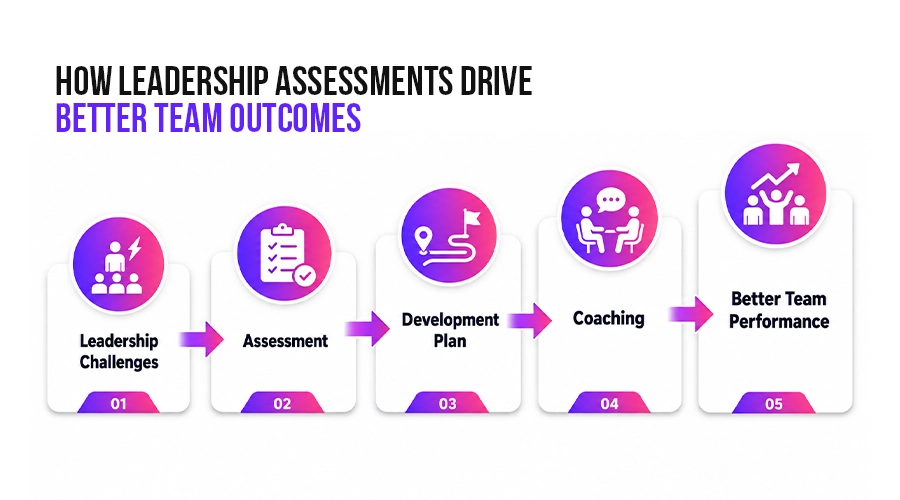
The best tools do more than assess. They connect assessment to development, development to coaching, and coaching to real behavioural change in the way managers show up every day.
Your HR Tool Kit's Everyday Leadership Agent gives Australian businesses an AI-powered leadership coaching tool that is always on, always specific to the situation, and grounded in what actually works in Australian workplaces. Explore the full platform at yourhrtoolkit.ai.