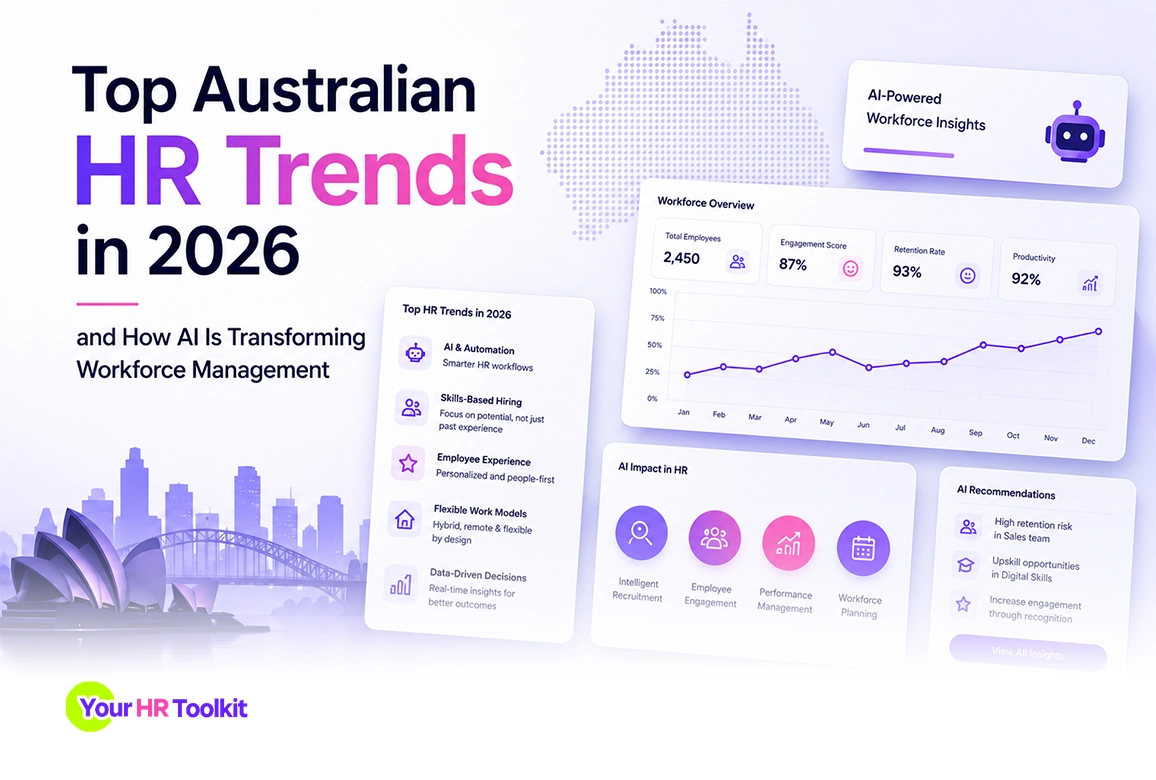
The way Australian businesses manage their people is changing fast. In 2026, HR is no longer just about hiring and compliance. It is about using smart tools to keep people engaged, cut admin time, and build teams that perform.
Across Australia, business owners and HR teams face the same pressures. Skills shortages make good candidates harder to find. Hybrid work is the norm. Employees expect more. And the cost of getting people management wrong keeps rising.
The good news is that AI and automation are making it easier to get things right. From smarter recruitment to real-time culture feedback, technology is giving Australian businesses tools that used to be available only to large companies.
Here are the top Australian HR trends in 2026 and what they mean for your business.
Why Australian HR Is Evolving in 2026
Several big forces are shaping HR trends in Australia right now, and they are all happening at the same time.
Skills shortages are still one of the biggest challenges. Businesses in healthcare, construction, tech, and hospitality are struggling to find the right people. When good candidates are hard to come by, every step of the hiring and onboarding process matters more.
Employee expectations have also shifted. People want flexibility, clear communication, and to feel like their work matters. Businesses that cannot offer this are losing people to those that can.
Digital transformation is picking up pace. More Australian businesses are moving away from manual HR processes and paper-based admin toward software and AI tools that save time and reduce errors.
Together, these forces are pushing HR in Australia toward something more proactive, more data-driven, and more focused on the employee experience.
AI-Powered Workforce Management
One of the biggest HR trends in Australia is the move toward AI-powered workforce management. This means using AI tools to handle tasks that used to take hours, and to surface insights that were previously impossible without a large HR team.
AI in HR is being used to match applicants to roles faster, automate onboarding admin, track performance trends, and help leaders understand what is happening with their people in real time. The benefits go beyond saving time. AI tools can flag when a team member is at risk of leaving based on engagement signals, suggest coaching approaches for managers, and help business owners stay on top of compliance without needing to know every rule by heart.
Your HR Toolkit is an AI-powered workforce management platform built for Australian businesses. It includes specialist AI agents that cover the full employee lifecycle, from recruitment and onboarding through to culture, performance, and leadership. Each agent is trained on Australian employment law and HR best practice so the guidance it gives is relevant and usable from day one.
Skills-Based Hiring and Talent Acquisition
Recruitment trends in Australia are moving toward skills-based hiring. This means focusing on what a candidate can actually do rather than where they studied or what job title they held.
For Australian businesses dealing with talent shortages, this makes a lot of sense. When you open hiring to candidates who have the skills but not the traditional background, you find more options and tend to build more diverse teams.
AI recruitment software in Australia is making this easier. AI tools can screen applications based on the specific skills a role needs, generate interview questions that test for real-world capability, and help write job ads that attract the right people.
The Recruitment Agent on the Your HR Toolkit platform helps business owners build position descriptions, write tailored job ads, and generate structured interview questions from a bank of 120 behavioural-based questions. It also guides users through finding the right Fair Work award so that pay and classification are correct from the start.
Talent acquisition in 2026 is not just about filling a seat. It is about finding the right person, setting them up well, and reducing the risk of an early exit.
Employee Wellbeing and Workplace Flexibility
Employee wellbeing has moved from a nice extra to a business necessity. Businesses in Australia that do not take wellbeing seriously are seeing higher turnover, lower engagement, and more sick days.
Hybrid work is now standard for most office-based roles. But managing a hybrid team well takes more than giving people the option to work from home. It takes clear communication, regular check-ins, and tools to keep everyone connected and on track.
Employee retention strategies in Australia increasingly focus on flexibility, mental health support, and creating a sense of belonging. Employees want to know their manager cares about them as a person. They want to feel safe raising concerns. And they want to see that their feedback leads to real action.
Australian WHS laws now require employers to identify and manage psychosocial hazards at work, things like high workload, low support, poor role clarity, and bullying. Learning and development is also part of the retention picture. Employees who feel like they are growing in their role are more likely to stay.
HR Automation and Operational Efficiency
HR automation in Australia is helping businesses get more done with less effort. Tasks that used to take hours can now be done in minutes with the right software.
Common examples of HR automation for Australian businesses include automated onboarding workflows that issue contracts and trigger system setups before a new starter arrives, automated reminders for probation reviews, payroll integration that reduces errors, and leave tracking that stays accurate without manual chasing.
AI tools for human resources go further than simple automation. They can generate documents, draft emails, write feedback scripts, and coach managers through difficult conversations. This is especially useful for small and medium businesses in Australia that do not have a large HR team.
Digital transformation in HR is not about replacing human judgment. It is about removing the time-consuming admin that gets in the way of it. When automation handles repetitive tasks, leaders can spend their time on the things that require a human touch: building relationships, giving feedback, and making decisions about their people.
Your HR Toolkit automates HR workflows through its suite of AI agents. Whether generating an onboarding checklist, drafting a performance improvement plan, or creating a culture pulse survey, the platform handles the admin so leaders can focus on their teams.
Employer Branding in a Competitive Talent Market
Employer branding is becoming one of the most important tools in talent management in Australia. In a competitive market, how a business presents itself as a place to work directly affects who applies, who accepts an offer, and who stays.
Candidates in 2026 do their research before applying. They look at reviews, check social media, and talk to people who have worked there. If your employer brand does not reflect a culture of respect, flexibility, and growth, you will lose candidates to businesses that do.
Employee engagement strategies play a big role here. Happy employees who feel valued are the best advocates for a business. When they recommend the company to friends or share their experience online, that does more for recruitment than any paid job ad.
Building a strong employer brand takes consistency. It means living the values you advertise, treating employees the way you say you do, and fixing the things that are pushing people away.
How Our AI Platforms Are Supporting Australian HR Teams
AI in HR is no longer experimental. It is being used every day by Australian businesses to manage recruitment, onboarding, performance, culture, and compliance.
Your HR Toolkit is an AI HR platform built specifically for Australian businesses. It includes nine specialist AI agents, each focused on a different part of the employee lifecycle:
- The HR Fundamentals Agent answers questions about the NES, modern awards, pay, and compliance.
- The Recruitment Agent builds job ads, position descriptions, and structured interview guides.
- The Onboarding and Probation Agent supports new starter setup and probation management.
- The Managing Underperformance Agent guides leaders through performance conversations and documentation.
- The Pay and Performance Agent supports pay reviews, goal setting, and performance documentation.
- The Culture Agent helps define values, run pulse surveys, and embed culture.
- The Everyday Leadership Agent coaches managers on 1:1s, feedback, and team communication.
Each agent draws on Australian employment law and HR best practice. Businesses get guidance they can act on straight away, without needing a large HR team or an expensive consultant.
Preparing for the Future of HR in Australia
The future of HR in Australia will be shaped by businesses that take people management seriously and invest in the right tools.
Workforce planning is becoming a core part of business strategy. Knowing what roles you will need, what skills your team already has, and where the gaps are is no longer a once-a-year exercise.
Learning and development will also keep growing in importance. As technology changes the nature of work, teams need to adapt. Investing in training and internal growth is one of the most effective workforce productivity strategies available.
For Australian businesses preparing for these shifts, the starting point is the basics: clear job descriptions, structured hiring, proper onboarding, regular performance conversations, and a culture people want to be part of. Technology can support all of these, but only if the foundations are in place.
Future workforce management trends will continue to be shaped by AI and automation. But the businesses that do best will be the ones that use technology to support better human decisions, not replace them.
Conclusion
Australian HR trends in 2026 point in one direction. AI is transforming workforce management. Skills-based hiring is reshaping recruitment. Employee wellbeing and flexibility are essential for retention. HR automation is saving time and reducing errors. And employer branding is becoming a real competitive advantage.
Your HR Toolkit at yourhrtoolkit.ai brings together AI in HR, HR automation, and practical workforce management support in one platform built for Australian businesses. Whether you are hiring your first employee or managing a growing team, it gives you the tools to do it well.
The future of HR in Australia belongs to businesses that manage their people deliberately. Now is a good time to start.