Most small business owners know their team should have goals. The problem is that vague goals like "improve customer service" or "be more proactive" do not actually change anything. They sound reasonable, but no one knows what hitting them looks like, which means no one really chases them.
OKRs fix this. They are a goal-setting framework that gives every person in your business a clear target, a way to measure progress, and a reason to care about the outcome. And for Australian small business teams, they are one of the most practical tools available for lifting performance without adding layers of bureaucracy.
This guide explains what OKRs are, how they differ from KPIs, and gives you real OKR examples across common Australian small business roles so you can see exactly how they work in practice.
Ready to build OKRs for your team right now? Try our Pay & Performance Agent to generate a complete OKR set for any role, tailored to your business goals.
What Is an OKR? A Plain-English Explanation
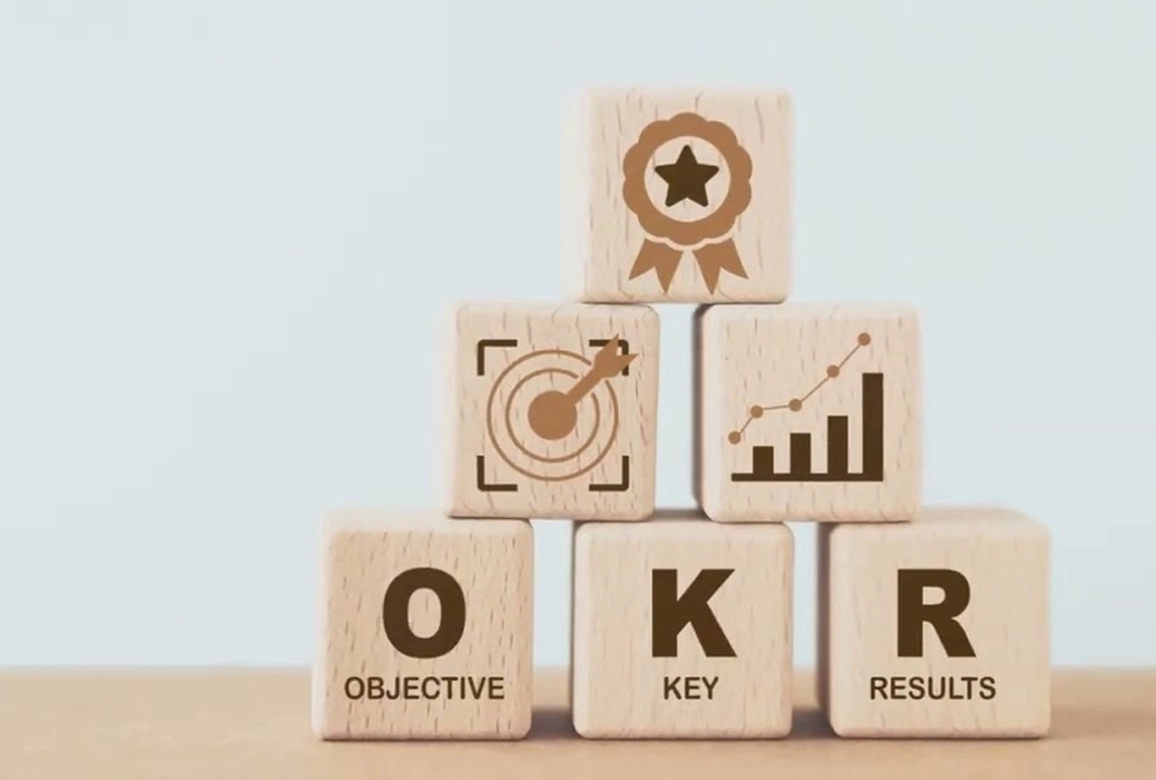
OKR stands for Objectives and Key Results. The framework was developed at Intel and later popularised by Google, but it works just as well for a 10-person team in Brisbane as it does for a tech company in Silicon Valley.
Here is how it works.
An Objective is a clear, qualitative statement of what you want to achieve. It is directional and motivating. It answers the question: where do we want to go?
Key Results are the specific, measurable outcomes that tell you whether you have actually got there. They answer the question: how will we know we made it?
Each key result needs three things: a measure (what are you tracking), a target (what number or outcome defines success), and a timeframe (when does this need to be done by).
A simple example for a customer service team member might look like this:
Objective: Deliver a consistently excellent customer experience.
Key Results:
- Achieve a customer satisfaction score of 4.5 out of 5 or above by end of quarter.
- Resolve 90% of customer queries within one business day by end of quarter.
- Reduce repeat contact rate from 22% to under 15% by end of quarter.
That is it. A clear direction plus three specific ways to prove you got there. The target for a successful quarter is to achieve at least 85% of your key results.
The golden rule for key results: if you cannot prove the result with a number, a percentage, a deadline, or a defined completion standard, it is not ready to use. "Improve customer satisfaction" is a goal. "Achieve a satisfaction score of 4.5 by 30 June" is a key result.
OKRs vs KPIs: What Is the Difference?
This is one of the most common questions Australian business owners ask when they first encounter OKRs. Both are used to track performance. So what is actually different?
KPIs, or Key Performance Indicators, are metrics you monitor on an ongoing basis. They tell you how things are running. Revenue per week, call handle time, leads generated this month. These are the dials on the dashboard. They are always on and they tell you whether the engine is healthy.
OKRs are time-bound goals. They are not about monitoring business as usual. They are about driving a specific improvement over a defined period, usually a quarter. They tell you where you are trying to get to and whether you actually got there.
The simplest way to think about it is this: KPIs tell you how you are performing. OKRs tell you what you are trying to achieve.
In practice, a well-run small business uses both. KPIs keep the team honest about day-to-day performance. OKRs push the team to improve, grow, and focus on what matters most in a given quarter. When someone is not hitting their KPIs consistently, that often becomes the focus of their OKRs for the next quarter.
The Three Types of Goals Inside a Good OKR Set
Before we get into the examples, it is worth understanding that a strong OKR set for any role covers three goal types. Not just one.
Operational goals are about the core of the role. Doing the day-to-day job at a high standard. Quality, accuracy, speed, reliability. These are the things someone is expected to do consistently, measured by whether they are actually hitting the standard.
Project or initiative goals are about specific work the person is driving or contributing to in this quarter. A system rollout, a process improvement, a campaign, a product launch. These have a clear start and end point and a defined deliverable.
Development goals are about the person's growth. A skill they are building, a capability they are developing, a qualification they are working toward. These keep people engaged and moving forward.
A well-written OKR set covers all three. When you only set operational goals, people feel like they are just being measured, not developed. When you only set development goals, the core of the job can slip. Balance is what makes the framework stick.
Real OKR Examples for Australian Small Business Roles
The following examples are drawn from common Australian small business industries and roles. Each includes an objective and three to five key results. Use these as a starting point and adjust the targets to fit your team and your business context.
Customer Service Representative
Objective: Be the reason customers come back.
Key Results:
- Achieve a CSAT score of 4.6 out of 5 or above by 30 June.
- Resolve 95% of queries at first contact by end of quarter.
- Complete the company's internal complaint handling refresher by 15 April.
- Reduce average handling time from 8 minutes to 6.5 minutes without impacting quality score by end of quarter.
Sales Representative
Objective: Build a pipeline that converts and a client base that stays.
Key Results:
- Achieve monthly revenue target of $X for all three months of the quarter.
- Close at least 12 new accounts by end of quarter.
- Maintain a client retention rate of 90% or above across existing accounts by end of quarter.
- Complete one professional development module on consultative selling by 30 April.
Operations or Administration
Objective: Keep the business running smoothly and reliably.
Key Results:
- Process 100% of invoices within 48 hours of receipt by end of quarter.
- Complete the review and update of all onboarding documentation by 1 May.
- Reduce supplier query resolution time from 5 days to 2 days by end of quarter.
- Achieve a 95% accuracy rate across data entry and record management by end of quarter.
Marketing Coordinator
Objective: Build awareness and bring the right people through the door.
Key Results:
- Increase website traffic by 25% compared to the previous quarter by 30 June.
- Generate 60 qualified leads through digital channels by end of quarter.
- Publish 8 pieces of content (blogs, social posts, or newsletters) per month for all three months of the quarter.
- Increase email open rate from 22% to 28% by end of quarter.
HR or Recruitment Coordinator
Objective: Bring in the right people faster and set them up to stay.
Key Results:
- Reduce average time-to-hire from 32 days to 22 days by end of quarter.
- Achieve a 90-day retention rate of 85% or above for all new starters this quarter.
- Issue compliant employment contracts and Fair Work Information Statements to 100% of new starters on day one.
- Complete the review of three key HR policies by end of quarter.
Retail Team Member
Objective: Create an in-store experience that drives sales and return visits.
Key Results:
- Achieve an average transaction value of $X or above for all three months of the quarter.
- Maintain a mystery shopper or customer feedback score of 4.4 out of 5 or above by end of quarter.
- Achieve an add-on or upsell rate of 30% on eligible transactions by end of quarter.
- Complete product knowledge training for the new range by 15 April.
Team Leader or Manager
Objective: Build a team that performs, develops, and stays.
Key Results:
- Complete fortnightly 1:1s with all direct reports for all six weeks of the quarter.
- Achieve a team engagement score of 4.0 or above in the mid-year pulse survey.
- Ensure all direct reports have a documented OKR set in place by end of week two.
- Address any performance concerns using the formal feedback process within 5 business days of identification by end of quarter.
How to Write OKRs That Your Team Actually Uses
Having examples is useful. But knowing how to write your own is what turns OKRs from a one-off exercise into a permanent part of how your business runs.
Here are the principles that make the difference between an OKR set that drives performance and one that gets forgotten by week three.
Start with the business goal, then cascade down. Your team's OKRs should connect to what the business is trying to achieve this quarter. If the business goal is to increase customer retention, a customer service team member's OKR should have a retention-related key result. When people can see how their goal connects to the bigger picture, they are far more motivated to pursue it.
Set stretch targets, not comfortable ones. Research from Leadership IQ found that employees with difficult goals report 34% higher job satisfaction than those with easy goals. A key result that is too easy to hit does not change behaviour. A key result that requires genuine effort creates focus, energy, and a sense of achievement when it is reached.
Write it with the person, not for them. OKRs that are handed down from above without discussion are treated as compliance exercises. OKRs that are co-created in a conversation feel like shared commitments. Even if you have a clear view of what the target should be, the conversation about how to get there is what creates buy-in.
Review them weekly, not just at the end of the quarter. Organisations with time-bound goals and weekly reporting make people 40% more likely to succeed. A quick check-in at the start of each week on where someone is tracking against their key results takes five minutes and makes an enormous difference to whether the goal is actually achieved.
Do not set more than three to five key results per objective. More than five and the focus is lost. Fewer than three and the objective probably is not ambitious enough. The sweet spot is four to five key results that together paint a clear picture of success.
OKRs and Performance Reviews: How They Connect
One of the most practical benefits of using OKRs is how naturally they feed into performance conversations. When it is time for a quarterly check-in or an annual review, you are not trying to reconstruct what someone achieved from memory or vague impressions. You have documented evidence.
The conversation shifts from "how do you think you went?" to "here is what we committed to, here is what we achieved, and here is what that tells us about where to focus next." That is a much more useful conversation for both the manager and the employee.
OKRs also make it easier to connect goal performance to pay decisions. When pay reviews happen, whether that is an annual review or an out-of-cycle adjustment, having a clear record of what was achieved gives the conversation structure and fairness. It means pay decisions are grounded in demonstrated performance, not gut feel.
This is exactly where the Pay & Performance Agent becomes useful. Beyond goal setting, it helps managers prepare for pay review conversations, structure talking points around what was achieved, and generate written confirmation letters after a review is complete.
Try our Pay & Performance Agent to generate OKR sets for your team, prepare for performance reviews, and handle the paperwork that comes with pay decisions.
Final Thoughts
OKR examples Australia give you a starting point. But the real value of the framework is in the consistent practice of setting clear goals, reviewing them regularly, and connecting them to everything else: pay, development, feedback, and team performance.
The research on this is compelling. Employees with clearly defined goals are 3.6 times more likely to stay committed to their organisation. People who write down their goals are 42% more likely to achieve them. And teams with ambitious, clearly tracked goals can see up to a 90% increase in performance.
That is not a marginal gain. For a small business, that is the difference between a team that grows the business and one that just maintains it.
Start with one role. Write the objective, build three to four key results, agree on the targets together, and check in weekly. Once you see how it changes the quality of your performance conversations, you will not want to run your team any other way.
Try our Pay & Performance Agent to get your team's OKRs built and connected to a performance and pay framework that actually works.